Introduction
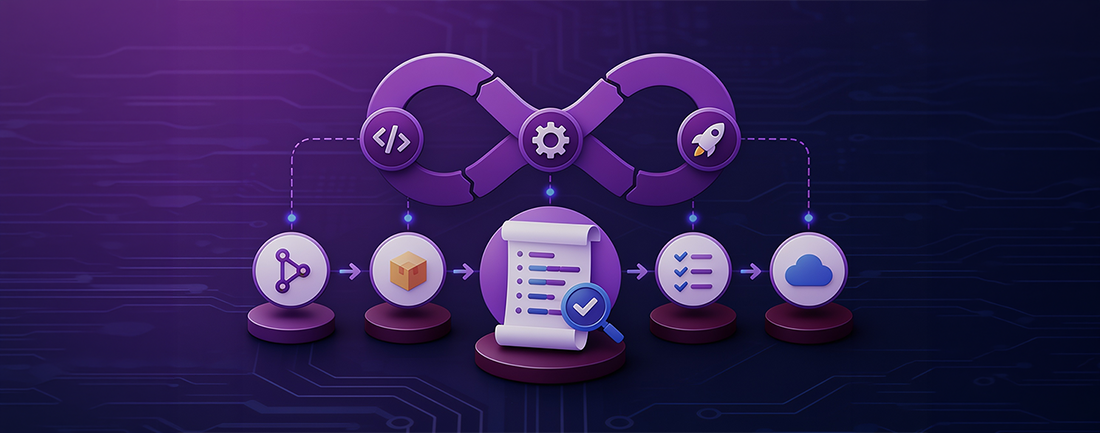
The Continuous Integration/Continuous Deployment (CI/CD) procedures are widely used in today's software development environment. CI/CD pipelines help deliver software more rapidly and iteratively, which enables software teams to meet customer needs and market demands more quickly. The automated testing ensures that software changes are completely validated before being put into production settings, which is essential to the success of continuous integration and deployment (CI/CD).
Integrating Test Scripts into CI/CD Pipelines Among the various methods used in automated testing, using manual and automated test scripts is one of the most important. Automated test scripts verify the program’s functionality, performance, and security. They can be as simple as unit tests or as complex as end-to-end tests. Development teams get constant feedback on the quality of their code, find bugs early in the process, and have a higher degree of confidence in their releases by directly integrating test scripts into their CI/CD pipelines.
Development teams may streamline their testing procedures, provide quicker software delivery, and ensure the supply of dependable and resilient software products by comprehending the function of test scripts in CI/CD pipelines.
Pain points
- Complicated Setup and Configuration: It might be difficult to configure the CI/CD pipeline such that it integrates easily with test scripts and is compatible with a variety of settings and technologies.
- Overhead for Script Maintenance: Test scripts need to be updated frequently to reflect changes to the testing environment and the application being tested. Keeping scripts updated can take a lot of effort and resources.
- Dependency Management: Test scripts frequently rely on external dependencies like libraries, frameworks, or APIs. Continually managing these dependencies and ensuring their compatibility and availability can be challenging.
- Prolonged Executions: The total performance of the CI/CD pipeline may be affected by the test suite's lengthy execution times, which may arise from an increase in the number of test cases. The release process can be slowed down and developer feedback can be delayed by lengthy execution times.
- Absence of Parallelization: Sequential test execution might cause bottlenecks and lengthen test execution times. The scalability and efficiency of the CI/CD pipeline can be hampered by a lack of parallelization (concurrent executions) in test execution.
- Resource Constraints: Especially in large-scale projects, allocating enough resources (such as compute resources and test environments) within the CI/CD pipeline to perform continuous automated tests might be a limiting factor.
Benefits
1.Faster Feedback Loop
- By including test scripts in CI/CD pipelines, developers can quickly assess the quality of code changes.
- When something goes wrong, developers are notified immediately, which enables them to fix problems early in the development cycle - thereby reducing the impact and cost of the bug.
2.Enhanced Code Quality
- Automated testing finds defects, regressions, and performance problems early in the development process, helping preserve code quality.
- Tests are automatically executed on each code contribution, allowing developers to identify and address problems before they affect users.
3.Increased Development Velocity*
- Rather than spending time manually carrying out tests, developers can focus on producing code by automating repetitive testing processes.
- This increases the development velocity and allows features & bug fixes to be released more quickly.
4.Enhanced Test Coverage
- Integrating test scripts into CI/CD pipelines enables testing across multiple platforms, environments, and configurations.
- Ensuring the robustness of the application and aids in the identification of edge cases.
5.Constant Testing Environments
- CI/CD pipelines reduce the risk of environmental inconsistencies that may result in false positives or false negatives by offering a consistent and controlled automated testing environment.
Challenges
1.Test Suitability
- It might be difficult to make sure that test scripts cover the right test cases to sufficiently evaluate the software's functioning.
- A deep comprehension of the system architecture, user needs, and potential edge situations is necessary.
- Insufficient test coverage can lead to undiscovered problems reaching production. 2.Test Maintenance
- As software evolves, test scripts need to be updated to account for changes in underlying technologies, or functionality.
- Maintaining a large number of test scripts may take a lot of work and time, particularly if the codebase is frequently updated.
- Outdated test scripts that are not updated can lead to false feedback and results. 3.Integration Complexity
- Seamless integration of test scripts into the CI/CD pipeline requires coordination across various tools, frameworks, and environments.
- Ensuring compatibility and interoperability across various pipeline components, such as build servers, testing frameworks, and version control systems can be challenging and prone to setup issues. 4.Test Data Management
- Test scripts often require access to specific test data sets to simulate real-world scenarios.
- Managing test data, including its creation, provisioning, and cleaning, can be difficult especially when working with complex or sensitive data sets.
- Maintaining data consistency, privacy, and test integrity adds another layer of complexity. 5.Parallel Execution
- Test scripts should run in parallel whenever feasible to accelerate the testing procedure and reduce cycle time.
- Coordinating the concurrent execution of tests, while managing dependencies and resource allocation, requires careful management. This is essential to coordinate the concurrent execution of tests while managing dependencies and resource allocation.
- Scalability can be a challenge, especially for large test suites.
IndustryTrends
1.Shift-left Testing
- "Shift-left" testing, which refers to moving testing operations earlier in the software development lifecycle, is gaining popularity.
- This trend calls for early integration of automated tests, such as unit and integration tests, into the continuous integration and deployment (CI/CD) pipeline, to identify defects faster and more closely to their source.
- Teams can reduce the time and cost needed for bug patches and raise the caliber of their product by identifying problems early on.
2.Microservices Testing
- As microservices architecture becomes the standard, testing techniques specifically designed for distributed systems are becoming essential.
- The intricacies of microservices necessitate that test scripts in continuous integration and deployment (CI/CD) pipelines adjust to test service interactions, resilience, and fault tolerance.
- Techniques like chaos engineering and contract testing are becoming more popular to ensure the dependability and resilience of microservices-based applications.
3.Infrastructure as Code (IaC) Testing
- Testing infrastructure changes in parallel with application code updates is becoming more and more important as Infrastructure as Code (IaC) methods automate infrastructure provisioning and setup. Testing infrastructure changes in parallel with application code updates is becoming increasingly crucial.
- Infrastructure validation is being added to test scripts in CI/CD pipelines to ensure that modifications to infrastructure configurations avoid generating vulnerabilities or compatibility problems.
4.Compliance and Security Testing
- Rising regulatory obligations and cybersecurity risks are increasing the need to integrate compliance and security testing into CI/CD pipelines.
- Incorporation of data privacy checks, legal compliance, and security flaws is becoming standard practice in test scripts.
- Continuous integration and continuous deployment (CI/CD) pipelines combine static code analysis and automated security scanning to detect and address security vulnerabilities early in the development cycle.
5.Shift-right Testing
- Shift-right" testing represents a parallel trend that focuses on testing in production or near-production contexts, in addition to the concept of shifting testing left.
- Shift-right testing makes use of feedback systems, logging, and monitoring to continually verify software behavior under real-world circumstances.
- To uncover errors that only appear in live settings, test scripts within CI/CD pipelines may incorporate production-like testing scenarios.
- Shift-right testing allows for faster incident response and ongoing improvement.
Best Practices
1.Start with a Clear Testing Strategy
- Establish a thorough testing plan that specifies the kinds of tests that should be automated, the extent of the test coverage, and the testing goals for the CI/CD pipeline.
- To efficiently prioritize testing efforts, make sure the testing approach is in line with the user requirements and business goals.
2.Prioritize Test Coverage
- Aim for a well-rounded test coverage that includes end-to-end unit, and integration testing among other testing categories.
- Prioritize testing high-risk and crucial features, to increase the efficiency of test coverage in the CI/CD pipeline.
3.Parallelize Test Execution
- Distribute test execution among several agents or nodes by utilizing the CI/CD pipeline's parallel execution features.
- Test execution times may be greatly decreased and pipeline throughput can be increased by parallelizing tests (running tests concurrently), giving developers quicker feedback loops.
4.Monitor Test Results
- To track test results and metrics trends over time, utilize a reliable reporting and monitoring system.
- To spot patterns and abnormalities, keep an eye on important metrics such as code coverage, test pass rate, and test execution duration.
- Notify stakeholders as soon as test failures or regressions occur through dashboards and notifications.
5.Continuously Improve Test Coverage and Quality
- To improve test coverage and quality, evaluate and update test scripts regularly.
- Perform peer reviews of test scripts and code reviews regularly, to identify areas for improvement and optimization.
- To increase testing efficacy inside the CI/CD pipeline incrementally, take stakeholder and test result feedback into account.
FireFlink Benefits
- Integrating automated testing with CI/CD processes can be challenging due to setup complexities or compatibility issues. FireFlink offers a seamless plug-and-play integration. Simply select from a list of popular CI/CD tools and provide your credentials.
2.FireFlink facilitates the integration of various open-source automation servers such as Azure DevOps, Jenkins, GitHub, and Bitbucket.
3.When test scripts are integrated into their CI/CD processes, flaws, and defects may be detected early on upon committing code changes. These defects can be raised on the FireFlink several popular tools or in FireFlink’s platform. When a bug is created, FireFlink will automatically provide a list of steps to reproduce the error as well as the details associated with the environment.
The success story of how FireFlink managed Test Automation for a large E-commerce Client
Background
The E-commerce Company is a renowned software development company. They found manual test procedures were difficult to maintain at the level and caliber required for their product releases. They decided to optimize their development and release procedures by using automated testing and incorporating test scripts into their CI/CD pipelines.
Challenges
- They wanted to have earlier detection of bugs and defects. When test scripts are integrated into their CI/CD processes, flaws and defects may be detected early on upon committing code changes.
- Managing test data for automated testing, particularly for end-to-end tests was challenging.
FireFlink Solution
- The client used FireFlink to identify, report, and track bugs.
- Bugs and defects were identified in the early stages.
- They used FireFlink’s dedicated defect section to track the defect.
- The client was able to leverage FireFlink’s data-driven testing technique to easily parameterize tests and cycle over various data sets to address problems with test data management. Step Into Intelligent Automation Testing Now!
Conclusion
- Optimizing test scripts for continuous integration and delivery (CI/CD) is crucial to sustaining software quality and attaining continuous delivery.
- Obstacles such as test environment setup, test data management, test flakiness, and test suite maintenance might arise. However, proactive steps and fixes can ensure the successful implementation of automated testing.
- Identifying and resolving bugs earlier in the development cycle reduces the impact and cost of the defect.
- Companies should leverage the benefits of CI/CD pipelines in their software development process by tackling these obstacles and utilizing a software test management platform such as FireFlink.